Table of Contents
When a cement job fails, the cement is often blamed. In reality, poor zonal isolation usually begins much earlier, with inadequate casing centralization. Casing centralizers for well drilling have a direct impact on cement placement, zonal isolation, and long-term well integrity.
Whether you drill onshore or offshore, the right centralizer keeps the casing closer to the center of the wellbore. This creates a more even annulus, so cement can flow around the casing with fewer restrictions. Better cement coverage means stronger bonds, better zonal isolation, and a well you can trust for years.
Not all centralizers perform the same. The correct solution depends on well trajectory, hole condition, formation stability, casing weight, and cementing objectives. Saga-PCE works with customers to recommend the most appropriate configuration for each application, not simply the lowest-cost option.
Key Takeaways
- Casing centralizers keep the casing centered in the wellbore, which improves mud displacement, strengthens cement bonds
- API Spec 10D-2 and ISO 10427-2 compliance means centralizers meet tested standards for restoring force, starting force, and durability.
Why EPCs and Drilling Contractors Choose Saga-PCE
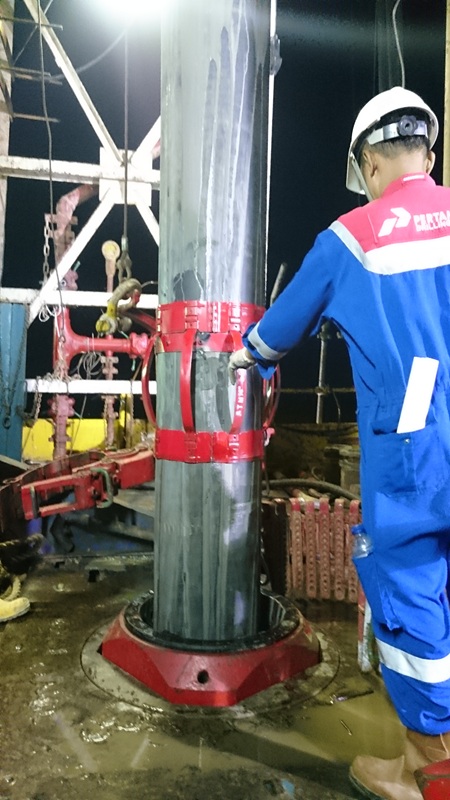
Customers choose Saga-PCE because we combine engineering expertise with manufacturing capability. We support centralizer selection, technical documentation, API compliance, custom manufacturing, global supply, and responsible engineering support.
A good centralization program helps you achieve:
- Better cement placement and mud displacement
- Stronger cement bond quality
- Lower risk of gas migration
- Longer well life
- Fewer costly remedial cement jobs
Which Centralizer Should You Choose
Centralizer performance depends on:
- Well inclination
- Hole size
- Casing diameter
- Formation condition
- Running forces
- Cementing goals
Bow-Spring Centralizers
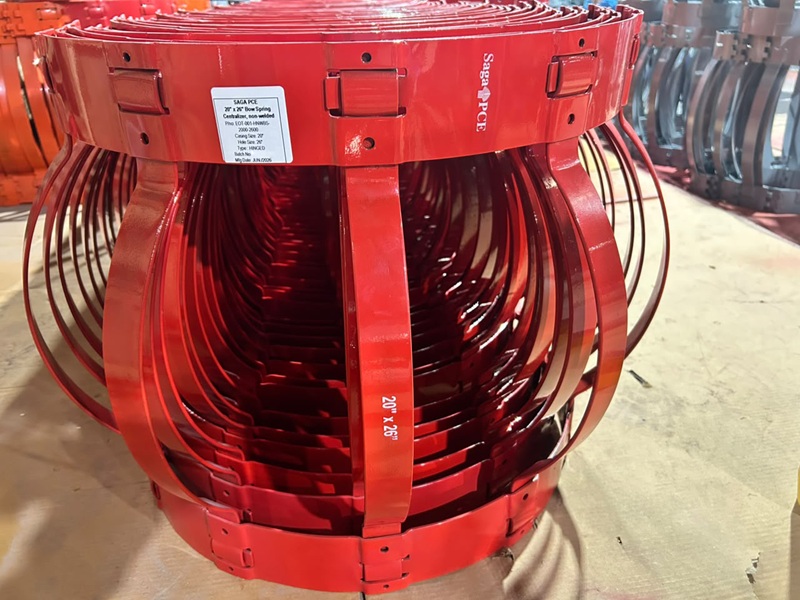
Saga-PCE’s production data shows welded bow-spring designs hold their restoring force better than non-welded designs after repeated compression. That’s why our bow-spring range favours welded construction, especially for deviated wells with repeated loading during the run.
Bow-spring centralizers are the most common type in use today. Flexible steel bows compress as the casing runs in, then expand once inside the hole. This flexibility lets them adjust to changes in hole size while giving a strong restoring force that pushes the casing back toward center.
They work well in open-hole sections with washouts or irregular formations. Benefits include high restoring force, low running resistance, and strong cement displacement.
Rigid Centralizers
Rigid centralizers use solid blades instead of flexible bows. Their outside diameter stays fixed through the run, which gives stable support where hole size is predictable. They suit cased-hole sections, where steady geometry matters more than flexibility.
Rigid designs offer high strength, strong wear resistance, and a long service life. They do create higher running forces than bow-spring types, but their toughness suits demanding conditions.
Rigid centralizers specified for vertical sections where a bow-spring design would give the same standoff at lower running force. Getting this right early can save real time and cost.
Semi-Rigid Centralizers
Semi-rigid centralizers blend features of both types. They flex more than rigid designs but give more support than bow-spring models. This makes them a good fit for wells with moderate deviation or changing formation conditions.
| Feature | Bow-spring | Rigid | Semi-rigid |
| Flexibility | High | Low | Moderate |
| Restoring force | High | Fixed | Moderate |
| Running resistance | Low | Higher | Moderate |
| Open-hole fit | Excellent | Limited | Good |
| Cased-hole fit | Good | Excellent | Good |
| Irregular wellbore fit | Excellent | Fair | Good |
Factors That Influence Centralizer Selection
Choosing centralizers means weighing several factors together, not picking one specification in isolation.
- Well trajectory: Vertical wells generally need fewer centralizers than deviated or horizontal wells, where gravity adds side load.
- Hole condition: Washouts and unstable formations affect both centralizer type and placement.
- Casing size and weight: These change loading conditions and affect restoring force and running resistance.
- Running forces: Strong restoring force helps standoff, but too much drag makes casing harder to run.
- Cementing goals: Some wells prioritize maximum isolation; others prioritize fast, simple installation.
Why API 10D Compliance Matters
Consistent performance starts with recognized standards. API 10D sets performance requirements for centralizers, covering restoring force, starting force, and durability under defined test conditions.
Saga-PCE manufactures to API Spec 10D-2 and ISO 10427-2 requirements, using quality materials, rigorous processes, and full inspection. This gives operators and drilling contractors equipment they can specify with confidence, across a wide range of well conditions.
How Saga-PCE Supports Your Drilling Operations
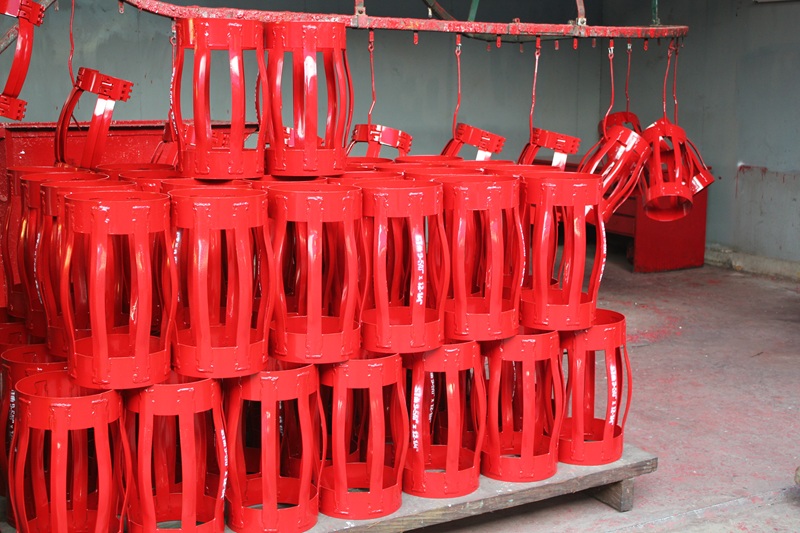
Reliable centralization starts with reliable manufacturing. Saga-PCE produces API 10D-compliant casing centralizers in-house, at facilities staffed by over 250 specialists including engineers, CNC operators, and QA/QC professionals. Every unit carries full documentation and traceability, built for both onshore and offshore operations.
Saga-PCE’s engineering team supports operators and drilling contractors from initial centralizer selection through post-run analysis. For technical data sheets, API Spec 10D-2 test documentation, or a project-based quotation matched to your well profile, contact our team and we will respond within one working day.